'%3E%3C/circle%3E%3C/g%3E%3C/svg%3E)
Insights from the Housing Data Explorer
For many young people in the UK, the dream of owning a home has never felt more elusive. Soaring property prices, stagnant wages, and a shrinking supply of affordable housing have turned what was once a common life milestone into an increasingly unattainable goal. Being one of these young people myself, the housing crisis is a highly personal issue. As a result, I was determined to use our housing data explorer to identify some useful insights.
Do more Vacant Homes mean more affordable housing?
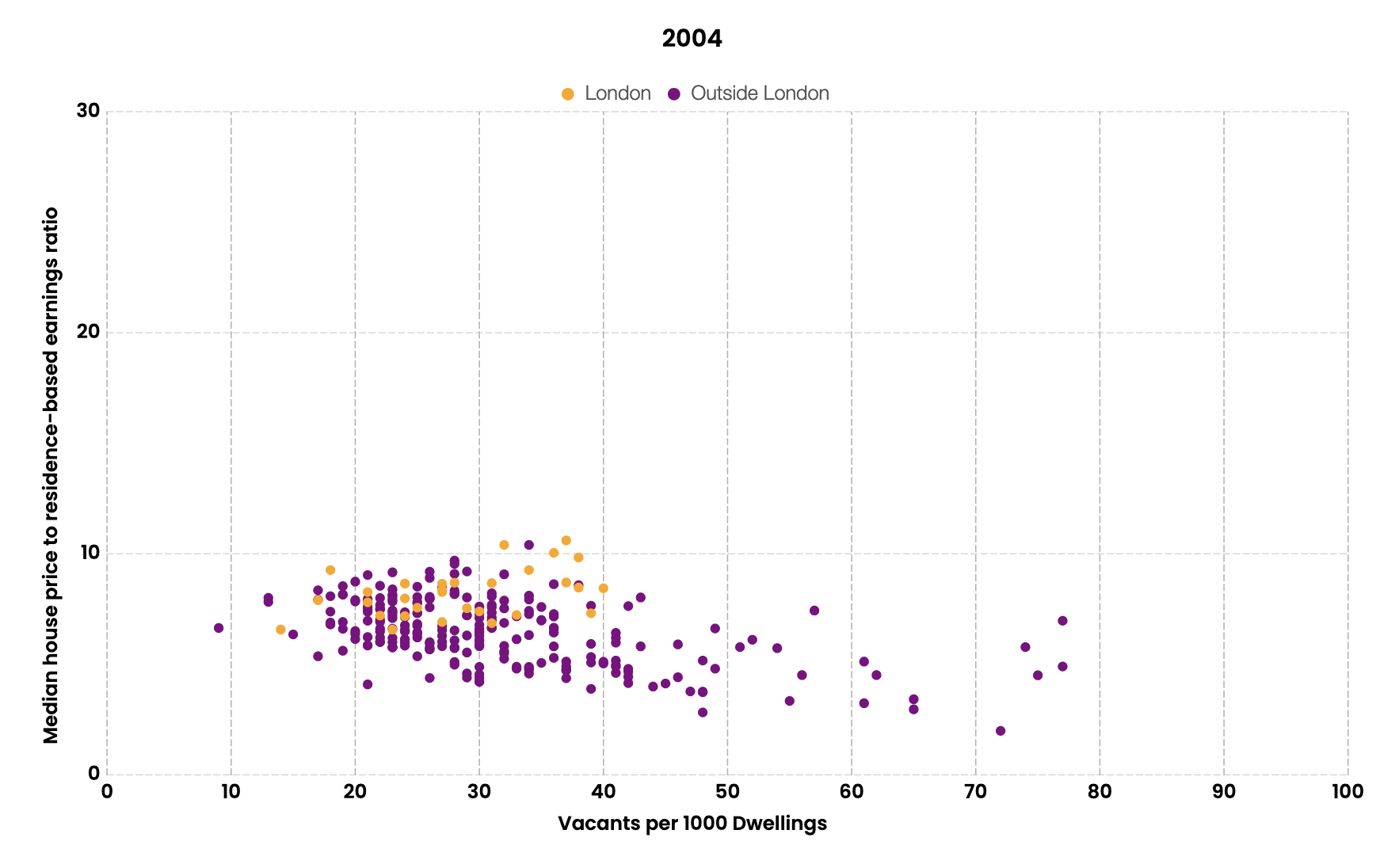
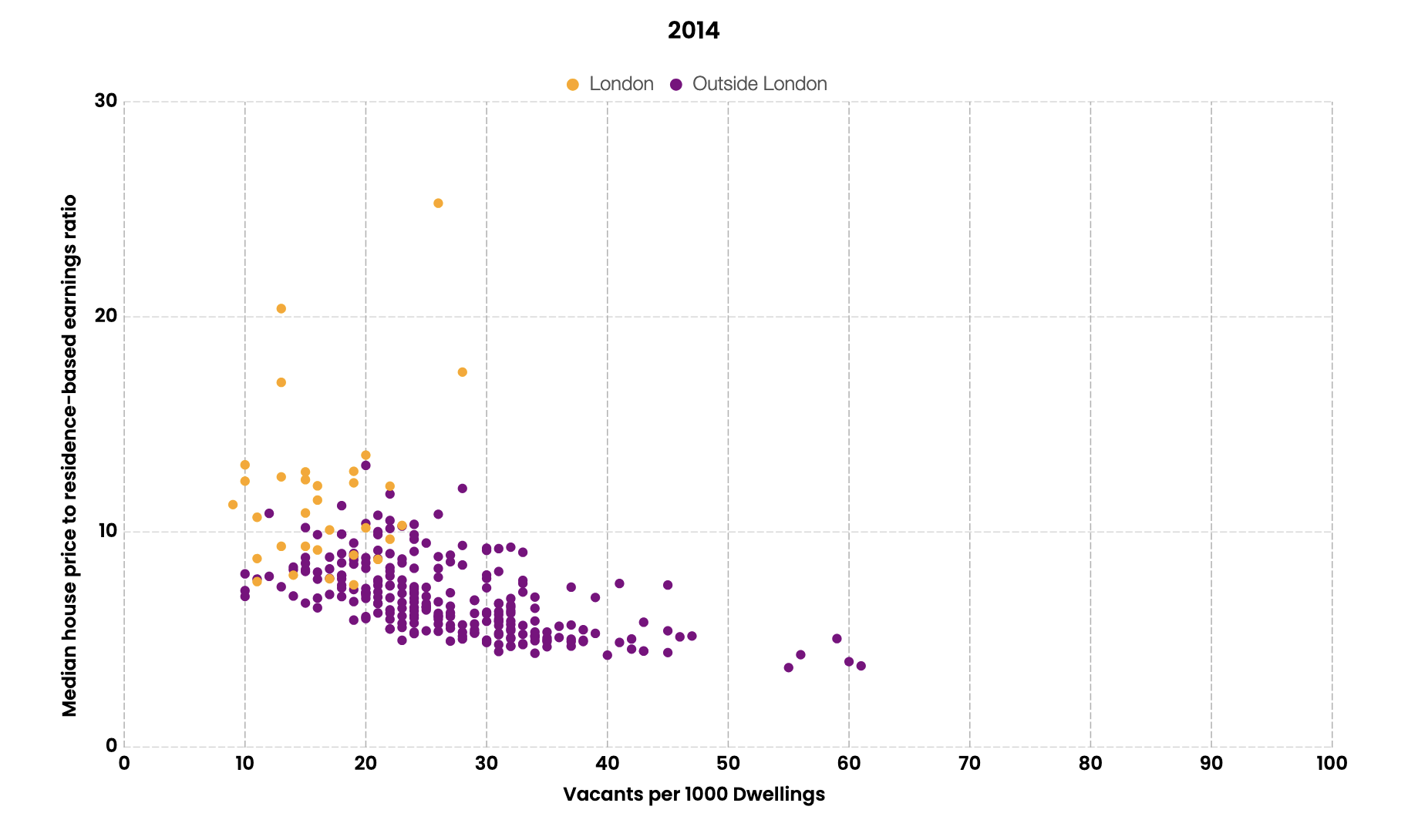
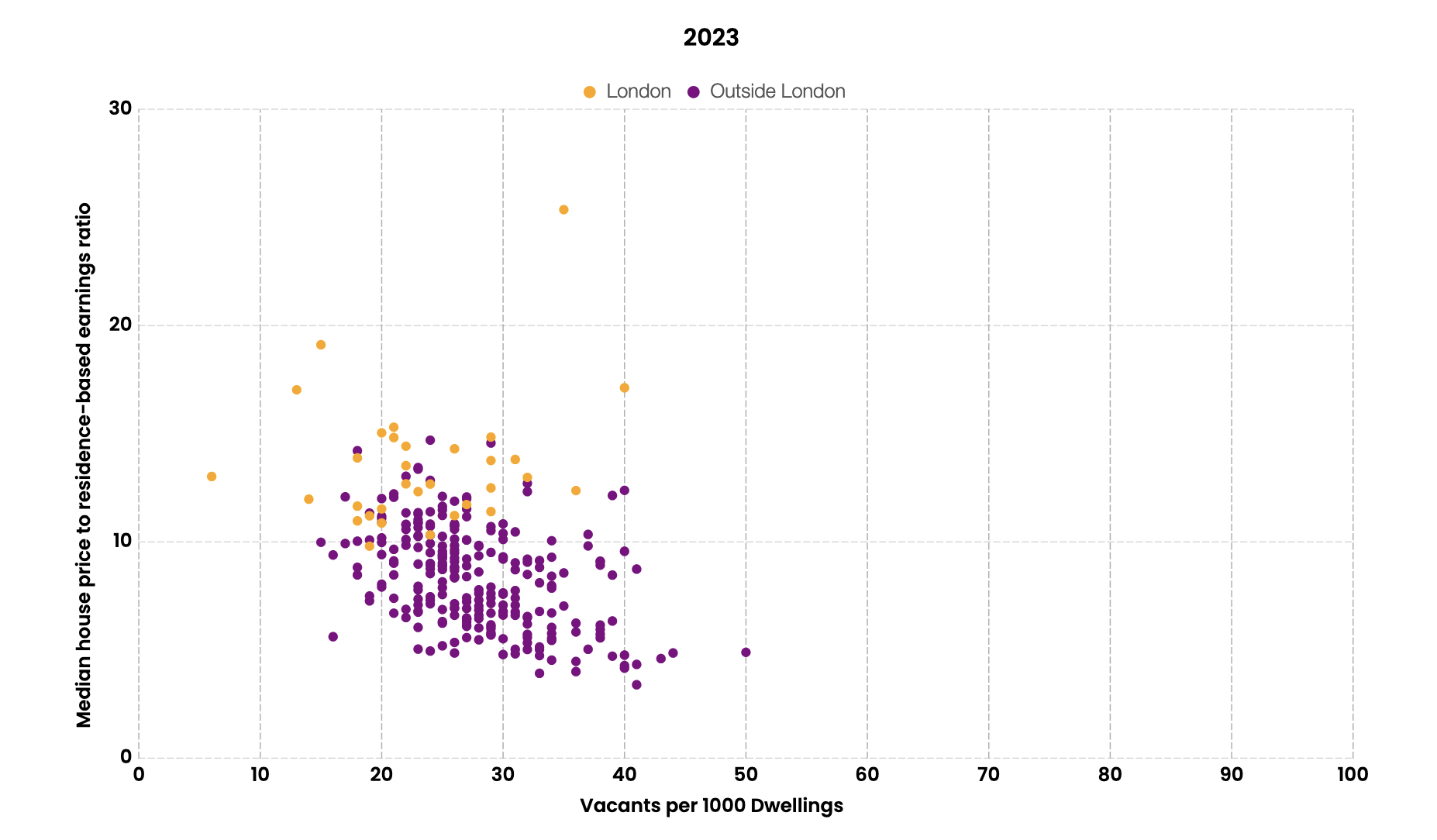
In 2022 Tom, our Head of Data, wrote a blog on the advantages of having more empty homes. Tom outlined how having more empty homes provides buyers and renters with greater choice, making it easier to find affordable options and move with less hassle. Vacant homes also simplify renovations, allowing for quicker and cheaper upgrades without disrupting occupants. Using house price to wage ratio as a measure of affordability, we can see that broadly, local authorities with higher vacant home rates are more affordable. Whilst the correlation is not strongly negative, if a local authority has a high number of vacant homes, it is more likely to have a lower house price to wage ratio. Using 10-year intervals, a clear trend emerges.
Credit: Open Innovations
Credit: Open Innovations
Credit: Open Innovations
See how we processed this data and view the interactive charts.
The UK’s vacant home rate has drastically reduced, whilst houses have concurrently become less affordable. In 2004, the most affordable places to live were Burnley, Hartlepool, Pendle, Blackburn with Darwen and Kingston upon Hull. All had 5 to 8% vacant home rates. In 2023, Liverpool is the only local authority with a 5% or higher vacant home rate. On a national scale, it appears that having a higher vacant home rate helps to keep house prices lower, but this effect is not linear, meaning that homeowners will not be at risk from a dramatic fall in house prices. International comparisons highlight the problem further. The UK has a vacant home rate of 2.7%, one of the lowest in the OECD. In France the rate is about 8%, and housing is also more affordable. We're not expert housing economists, and we recognize that more detailed analysis is necessary to draw concrete conclusions, but it seems that increasing the number of vacant homes in the UK could be a step in the right direction.
Can the 2024 Election Results provide some insights?
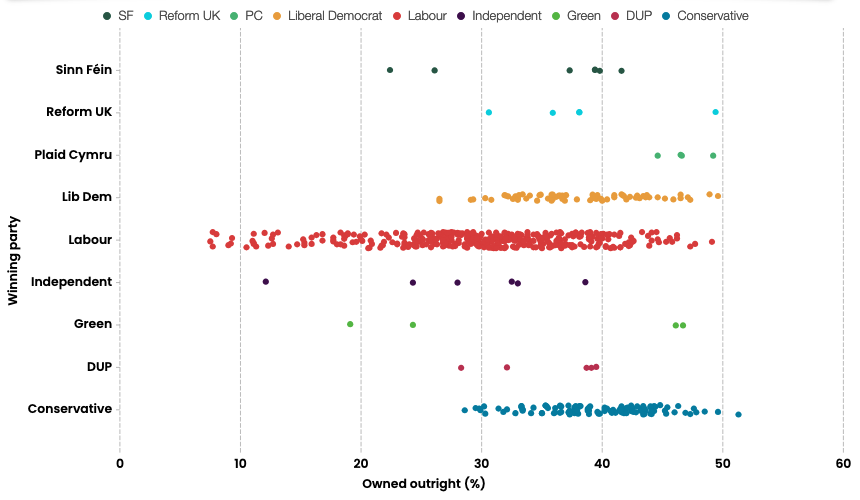
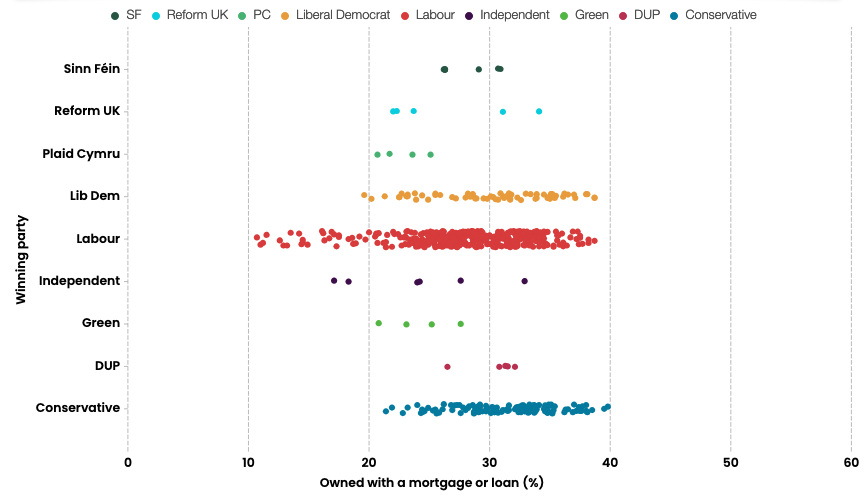
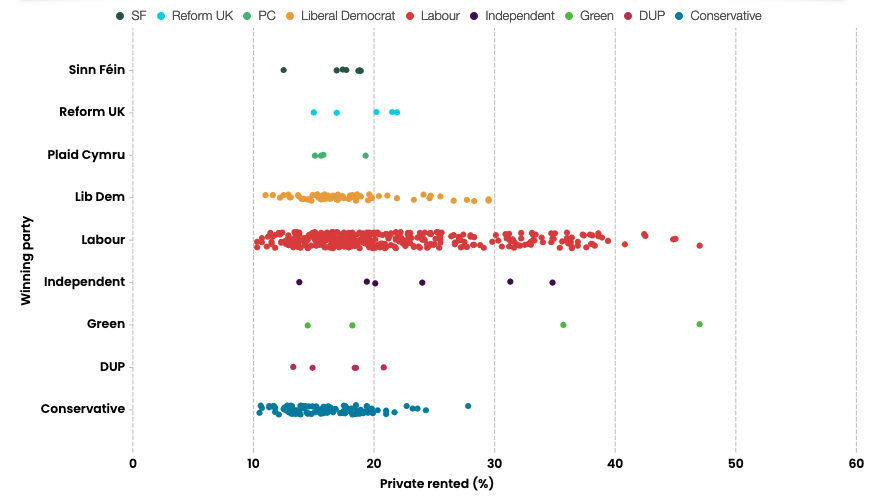
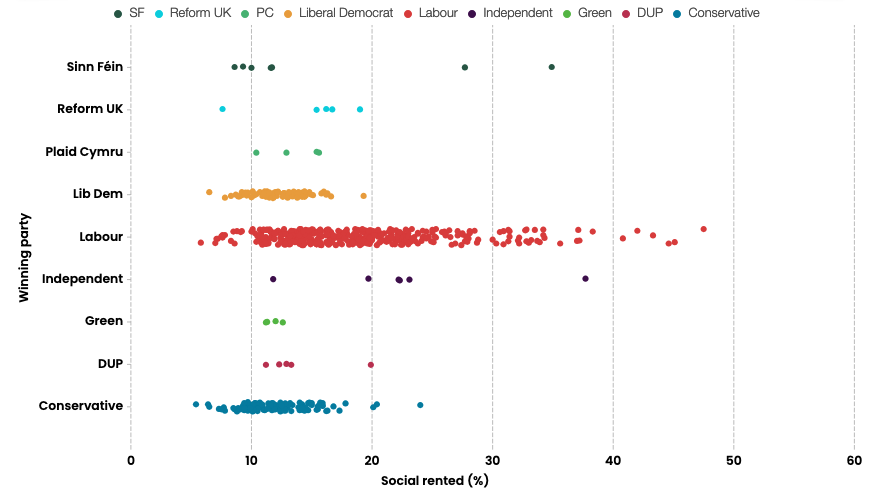
With Labour winning the 2024 Election, we wanted to see how different type of tenureships voted, and whether this signals a change in whose interests will be most represented by government. When we made our General Election 2024 website, we processed demographic data for each constituency. One of the topics in that data was housing tenure. For each constituency there is a percentage of homes owned outright, with a mortgage or loan, private rented, social rent, and other. You can view the data processing and results on the housing site.
Credit: Open Innovations
Credit: Open Innovations
Credit: Open Innovations
Credit: Open Innovations
See how we processed this data and view the interactive charts.
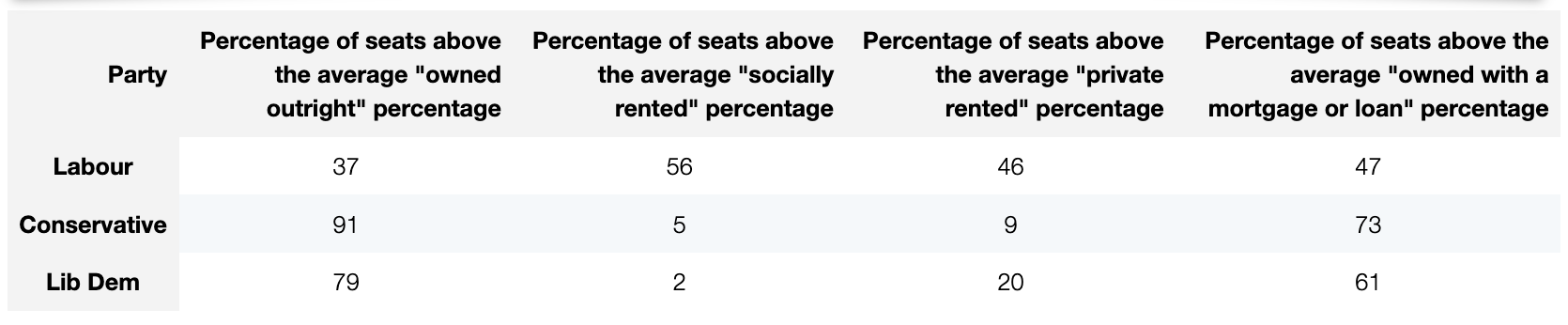
For Labour, Conservative and Lib Dems respectively, 37%, 91%, and 79% of their seats have higher than UK average percentage of homes with the tenure type "owned outright". You can see the results for the other tenure types in the table below:
Credit: Open Innovations
From these results, it is evident that Labour is a government that heavily relies on the support of renters, far more so than any recent Conservative government will have done. And this is evident through Labour’s policies on renting: Abolish Section 21, putting an end to “no fault” evictions, and extending Awaab’s Law to the private sector in an attempt to improve living standards. More broadly, Labour have pledged to build an unprecedented 370,000 homes a year for the next 5 years, with Housing Secretary Angela Rayner promising “the biggest boost to affordable housing in a generation”. Whilst these targets are very ambitious and much has been said about the huge amounts of funding needed to make them feasible, the signal that they send is a positive one.
Final Thoughts
The UK's housing crisis remains one of the most pressing issues facing the country, with affordability at the heart of the problem. The issue of vacant homes could play a crucial role in the broader strategy to make housing more affordable. An increased vacancy rate might create a more balanced market, where the competition for housing is less intense, leading to more affordable options for buyers and renters alike. Moreover, the political landscape suggests that a Labour government, particularly one reliant on the support of renters, could be well-positioned to address this crisis effectively. With a strong mandate from a demographic increasingly burdened by high rents and limited housing options, Labour could spearhead significant reforms aimed at improving access to affordable housing. The aim of building the Housing Data explorer was to uncover any useful insights into the world of Housing, and these are just some of our initial findings. We’ll continue to make explorations into the data, and grow the platform.
As always, we want your help, and are welcoming to any suggestions you may have. So feel free to have a play around with the Housing explorer and look for your own insights. Get in touch at hello@open-innovations.org.