'%3E%3C/circle%3E%3C/g%3E%3C/svg%3E)
Wuthering Bytes talk - August 2024
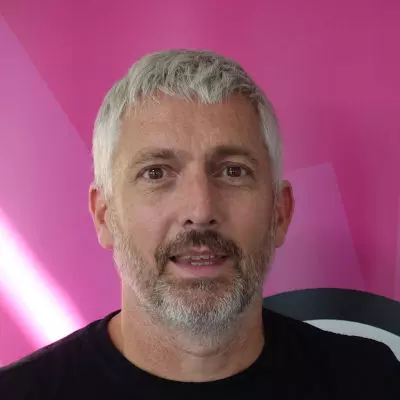
Hello everyone, my name is Paul Connell, and I'm the founder of Open Innovations.
Thank you to Wuthering Bytes and Andrew Back for inviting me here to talk about the ten years of Open Innovations.
I'm not going to use any slides, and I'm not going to give you a boring timeline of our work. Instead, I'm going to tell you the story of Open Innovations using a live document and links to the web :).
I'll be using our website as a reference, and I'm hoping to have time for a Q&A. That's all I'm going to do, and hopefully, I'll be able to show you the work we've done and share some thoughts on how we've managed to do it successfully.
Tom Forth Head of Data - will chip in as we go.
I think this talk will last about 20 mins and then I'd really like to have time for Q&A - so please do have those questions ready.
I am not going to talk in any detail about The Data City - which a spin out of Open Innovations - in any detail today but you can look it up. It is an important part of our story but if you like, Open Innovations is more important to it than The Data City is to Open Innovations. So I'm going to focus on Open Innovations in this talk. So, what is this thing that we have built?
Well this is how we describe ourselves:
Open Innovations (formerly ODI Leeds) is a not for profit, independent, mission-led, radically open organisation, that works UK-wide from its base in Leeds. We work in the open with our sponsors, companies, organisations, governments and individuals to use data to innovate and help people make better decisions. We help you to innovate with data – to use the web as it was intended – and create massive surpluses of shared value.
We are now an established, sustainable, self-funded, non-profit organization based in Northern England, doing innovation with data and sometimes we forget but we have influence far beyond Leeds, where we are based.
But that's definitely not what we were at the start, so let's begin at the beginning, which I guess starts with me.
And this is one of the main points you'll see as a recurring theme throughout. I was ready. I'd done my 10,000 hours, as Malcolm Gladwell (maybe controversially) suggests. I used to be an Environmental scientist and Consultant but now I'm a self-taught web, data, innovation person, and that's another common theme; all our people are self-taught tinkerers, data & web scientists, and high-performing individuals, who are restless and curious but most importantly want to build things - not talk about it or give homework to other people.
So, about me: I'd been an environmental engineer/scientist since I graduated from Imperial College with an MSc in the mid 90s and used to be a director at a large PLC environmental engineering consultancy, in about 2010 I needed to leave. I needed to do something more interesting, I wanted to build something so I did.
I left that world in the midst of the Financial crisis!! In 2010 and did a bunch of different things. I worked for a cool innovation company, set up an Internet of Things connected home company (which failed), led business devolpment for a land remediation company, and worked for Eon in their Smart Cities Team. But I knew there was something around open data, innovation, and cities that would make a massive difference and I understood that I could do it. So, what did I do? I read everything I could about the web, data, the Internet of Things, cities, and innovation. But I also had to keep the lights on, so I freelanced as a consultant. But I needed to create something interesting for myself that I could work on and also ride my bike to. This was around 2010, three years before Open Innovations started in its first incarnation as ODI Leeds.
As an aside, Freelancing and getting paid to do stuff that people want you to do forces you to find out what you're good at, because that's what people will pay you to do it is usually different to what you think you are good at.
So, out of all that work, reading, talking, considering, and discussing the web, data, innovation, and cities, there are five themes that helped me understand the opportunity and largely influenced how we created the structure of Open Innovations. It wasn't just made up on the fly in the pub. So these are, and hopefully some of you will recognize these:
- The Cluetrain Manifesto – How the web works, should work, and maybe how we've broken it. Markets are conversations, and so much more.
- Ripples from the Zambezi by Ernesto Sirolli – If you want to help somebody, shut up!
- The Agile Manifesto – We measure ourselves by working software. That's it.
- The work of Dave Snowden and his Cynefin framework – Really helped me understand complexity, the world as it really is, and how you create the conditions for innovation. We'll come back to that and the world of starvation, pressure, and change of perspective.
- The KLF: Chaos magic and the band that burned a million pounds by John Higgs – There are no rules when you're doing pioneering work.
So, when Gavin Starks, who was then CEO of the ODI, had this fantastic idea for his ODI nodes, I was ready. We'd already been speaking to lots of people in Leeds about the need for something that wasn't aligned to the old way of doing things, was about data, was about the city, but was also independent and able to make its own mistakes—a new institution, if you like.
And Data Mill Leeds [later Data Mill North] was just about to launch.
We said yes to becoming a node.
At this point I need to give a big shout-out to Tom Bridges, Dylan Roberts and Tom Riordan of Leeds City Council, who gave us some seed capital to let us start. When I talk about seed capital, I mean £15,000 for 12 months—it was not a lot of money.
I found out two things really quickly:
- There was a massive untapped enthusiasm in this part of the world for a national institution that wanted to do something cool, devolved and ambitious for the North of England.
- I also found out really quickly that there was next to no money to do anything about it.
So, what did we do?
Well, we'd done our homework. We already had some principles and half a plan set out. We knew we needed to be independent, we knew we needed physical space, we knew we needed to be self-funding, we knew we needed to have local impact but some national reach, and we knew we needed to focus on the work and stop talking.
So, we took Dave Snowden's advice: we created a burning platform. We had no resources to speak of, really, We created pressure by taking a three-year lease on an old building in Leeds with only six months of our rent covered. Eeeek!!! And we changed our perspective by being #RadicallyOpen on the web.
We were serious about it. We needed to succeed, but we were ready. So, what we did was to do stuff. We wrote zero white papers, and I'm very proud of that. We were following the advice of the Cynefin framework, which tells you that if you're in a chaotic system, you need to act, sense, and respond. In simple terms, you have to do stuff!
So, we did stuff!
We also decided we needed to write all the stuff down, record it, and put it on the web. That's what Cluetrain tells you - markets are conversations! I'll show you that here on our website.
The first thing we did was create a space - an independent, neutral space in the city. A Switzerland, if you like. Having that made a huge difference, in terms of credibility. It was a statement of intent and also it allowed people to come to us - an attractor within a chaotic domain if you like, in complex systems language.
But this is a point where I need to mention, talk about, and thank Kathryn Connell, my wife, who, when I explained this madcap idea to her, reminded me very clearly that I had almost zero design skills. Then she told me she was going to do it for us. That confidence, clear understanding of my limitations, but also an inability to accept mediocrity, was one of the crucial things at the start that made us a success. If this space was not any good, we were stuffed. I'll just show you some pictures now. We created an amazing space, a high-performing culture, and an open way to help people engage with us when they were ready to that hasn't really changed since we started.
And it was ace.
The thing about doing stuff is, if it's any good, great people find you and join in. I think today is a great example of that, and that's what happened with Tom Forth. He found us and still helps us to do stuff. And if you know Tom, Tom had done his homework too. He knew data, he was passionate about being open and the web, he knew what was wrong, and he also knew how to do things quickly and with high quality. He passed Kathryn's mediocrity test, so he was in.
So, if we look at what we were doing, it's amazing - so much work, so much activity, so much value being generated.
We were off. We found more sponsors.
We did events, we did innovation work, we started doing some projects, and we were working alongside the ODI with their fantastic brand. We took on some funded projects - not too many as we definitely didn't want to become a consultancy or agency - which allowed us to hire people, work with associates, and slowly we became commercially viable and could pay our way. As we worked out what our opinions were, people started to listen, and then they asked us to start building things for them. It's all here on our website for anyone to access, use, share, remix, and remodel.
Our dashboard is unashamedly borrowed from the ODI. They don't have one anymore, I wonder why.
So, let's look at the dashboard. There are some interesting things here, aren't there?
You can see our events. Let's have a look at that. You can see our sponsors, you can see our revenues, you can see our projects. I guess there are five periods of Open Innovations:
- 2013/14: start!
- 2015-2020: doing, doing, doing, doing. It's all there on our website.
- 2017-2019 : established The Data City
- 2020-2021: well, I don't want to go into the pandemic too much, but it changed everything. We could do a whole talk just about that on its own.
- 2022 onwards: we're into the period of Open Innovations 2.0.
I've written all about this, of course we have, and it's here on our blog.
In our 2022 review we discussed an important shift in what people and organisations want from us, it stated:
The biggest change that we experienced in 2022 was an acceleration in the evolution in what people and organisations expect from us
In simple terms we can describe this as moving from
show me what we can do with data and the web, so I can show it to other people in my organisation or our partners
to
our organisation knows it needs to do things differently with data and the web and be more open but we are not sure how to do it, please can you help us.
This shift in expectations obviously requires a shift in our business model.
That's the polite version - it's for public consumption, it's for our sponsors, it's for funders, it's for people who've worked with us, and it's where I've been very polite about what's going on. Have a look and feel free to let us know what you think. I'll come to some other perhaps more punchy opinions at the end of this talk.
From my personal perspective, the reason we've been able to do what we've been able to do is:
- that we were ready, we did our homework,
- we built rather than talked about building, and we hand out homework to the people we thought should build stuff.
- our team that we've worked with over the period, and currently, are high-performing, restless, and, forgive me, not mediocre. So, for those kinds of people, you have to create a way to give them boundaries but also the freedom to deliver high-quality work. That's something I don't see very often in organizations, where work is delivered on projects, not by teams.
- we are unashamedly nerdy. It matters to us how it works. It matters to us that it works. It matters to us that it's correct. And it matters to us that we understand how and why things are the way they are. That's a big part of what sets us apart and makes us successful.
- people know we care about Northern England and what happens here, and when we present work, people read it, people listen.
Over the years, as we've been working, I think people have come around to our point of view.
That North England has a huge role to play in the future of the UK and UK Government has let it down. That's really important, and having a point of view has been massively important to our success.
But this influence has been something of a surprise to me; the way in which our point of view has become much more influential than any of us ever imagined it would be. Sometimes we get surprised by how far our work, opinions, and point of view reach. It's something I don't think we've fully explored or understood, and something we should do more about.
That way our centralized institutions work is something, which in my opinion, is just broken - resulting in poorly thought-out, mediocre interventions in tech, innovation, and data. It has just been, as my kids would say, so mid.
Why is that is the subject of another talk and maybe something we should try and do something about in Open Innovations 2.0.
And I think if you use the example of the ODI and ODI HQ and how they engaged with us and the rest of the country, it's something that should be critiqued and learned from. It could have been so different if just a small amount of that money had been placed - without strings elsewhere outside of London. Ask yourself, what would be the impact, and what would exist now, if that had happened - particularly when you think about the untapped, pent-up demand for people to do nationally interesting, important work from somewhere outside London? What Open Data Manchester might be, what Open Innovations could be…
But I want to finish on a positive note,. So here are some quick highlights that we are all very proud of at Open Innovations:
- The space: our space, the space for all of us. So many times, people came and visited and said, "Oh, you could be in Berlin!" No, you're in Leeds. This is what we do here—we're pretty cool too, and we do cool stuff. A great example of this is our work with The Netherland Embassy - Northernlands
- Our sponsors
- The team
- Algoraves one and two: People really didn't know what to make of it, particularly the Danger Noise sound system.
- The way in which Tom and the team have managed to work and deliver high-quality data products and insights around transport and the economy for Northern England. Tom can speak for himself on that.
- The work of the team to develop their own way of building things, and you can read all about it in our Open Innovations principles and platform. Giles Dring of this parish has done a fantastic job!!
- Our showcase in 2023 was just fantastic, amazing. It really showed how far we'd come over the last 10 years.
- Taz Chiles and her fantastic work on Culture Data
- Stuart's amazing work to make our website the fastest smallest and cleanest thing on the web, his work on our tools and of course hexmaps!!!!
- Luke our newest Data Scientist who is doing fabulous work on our visualisation tools and housing data in particular.
- And christian Spence who has worked with the team to build EDD [Economic Data Dashboard].
We're still working out what Open Innovations 2.0 is will be. As with all our work, we'll be doing doing doing and we'd like people to help us figure out what that should be. I wrote about it in my blog post but I'd love you to get involved. Talk to me, talk to Tom, talk to the team about what you think we could be as we enter the next phase for Open Innovations.
Thank you very much.
Dedicated to Patrick Lake RIP - a young man who had a massive impact on us in the short time he was with us.